The French Education System: Navigating Inequality and The Urgent Call for Reform
Often lauded globally for its commitment to free education from primary school through university, the French education system is deeply woven into the fabric of the nation's identity, symbolizing accessibility and opportunity for all. However, beneath this commendable facade lies a complex reality, fraught with systemic barriers and profound inequalities that challenge the very principles it purports to uphold. Interviews with individuals immersed in both public and private French education, past and present, reveal a stark divergence between ideal and experience, painting a picture of a system in dire need of French Education: Unveiling Challenges Beyond Free Access and fundamental change. These voices, echoing a growing public sentiment, underscore a pressing national discourse about the future of learning in France.
The Unsung Heroes: Teacher Status and Pedagogical Shortcomings
A recurring and significant barrier highlighted by those within the system is the diminished status of teachers. Far from being revered, educators often feel undervalued and underpaid, a sentiment that profoundly impacts morale and, consequently, the quality of instruction. The criticisms leveled against teaching standards describe them as frequently "brief and one-sided," leaving little room for individuality or innovative engagement. Students often feel compelled to conform strictly to teachers' expectations, stifling creativity and genuine curiosity. This pedagogical rigidity can be seen as a systemic échec—a failure to foster a dynamic and student-centric learning environment.
When teachers are not adequately compensated or respected, the profession struggles to attract and retain top talent. This can perpetuate a cycle where resources and support for professional development are lacking, leading to a static teaching methodology. Imagine a classroom where every lesson is a lecture, every assignment a test of rote memorization, and individual perspectives are marginalized. Such an environment, while perhaps efficient for covering curriculum, often fails to inspire critical thinking, problem-solving, or a lifelong love of learning. Addressing teacher remuneration and professional development is not merely about fairness; it's a critical investment in the nation's intellectual capital and the foundation for any meaningful reform.
The Silent Struggle: Mental Health and the Burden of Individual Responsibility
Perhaps one of the most concerning aspects of the French education system's challenges is its profound neglect of student mental health. The intensely competitive environment often places the entire burden of success squarely on the student's shoulders, with little to no psychological support or general encouragement. Instead of being uplifted upon reaching a passing level, students frequently face criticism for not achieving higher. There is a prevalent lack of understanding for issues such as fatigue, poor mental health, or even mental disorders.
Students are often discouraged from seeking help, and when they do, their pleas can be dismissed. One interviewee painfully recounted, "When I was depressed and exhausted from long hours, teachers would get angry when I fell asleep in their class. I was given seven hours of detention because the teacher felt insulted. No one listened when I said I needed those hours to revise and sleep." This poignant anecdote illustrates the severe French Schools: The Hidden Toll on Student Mental Health—a stark échec to provide a supportive and empathetic learning environment. The system's focus is demonstrably not student-centric but rather built upon a hierarchical structure where individual well-being is often sacrificed for academic performance. Cultivating an environment where mental health is openly discussed, and support is readily available, is paramount for fostering resilient, well-adjusted learners.
A Two-Tiered System: Public vs. Private Education and Socio-Economic Disparity
The divide between public and private education in France is a significant driver of inequality, creating a two-tiered system that offers vastly different opportunities based largely on socio-economic background. Students from private institutions consistently report higher levels of satisfaction, often benefiting from smaller class sizes, more resources, and potentially more innovative pedagogical approaches. In stark contrast, a student in public education shared how they received no guidance on future options—neither concerning university programs nor career paths, let alone international opportunities. Every decision regarding their future was based solely on their own research, a stark illustration of the systemic échec to provide equitable support.
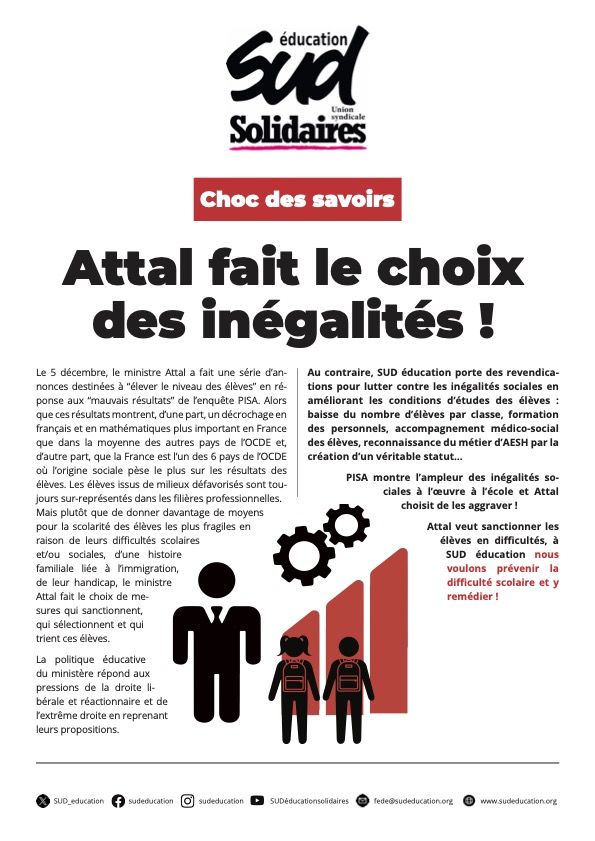
This stratification undermines the ideal of "égalité des chances" (equality of opportunity) that France champions. Children from privileged backgrounds, attending private schools, gain an inherent advantage, leaving their public-school counterparts to navigate a complex academic and professional landscape often without adequate support. Addressing this requires a systemic reform that empowers public school teachers with better resources, professional development, and greater autonomy. Furthermore, a government-led initiative to publicly value the teaching profession, perhaps championed by figures like former Education Minister Gabriel Attal during his tenure, could significantly alter student and parental attitudes towards public education, fostering a more respectful and supportive environment.
Reforming the Rote: Curriculum Rigidity and Vocational Valour
The rigid, one-sided format of the French curriculum further exacerbates inequality. Until recently, students were largely steered towards one of three main academic pathways: Literature, Economics, or Mathematics and Science. Qualifications derived from these academic disciplines were historically considered the gold standard, marginalizing those who did not fit this narrow mold. More practical or vocational-oriented diplomas were often perceived as negative or "sub-standard," limiting the aspirations and potential of countless students whose talents lie outside traditional academic pursuits.
This narrow focus is a fundamental échec to recognize the diverse talents and learning styles within the student population. It restricts social mobility and contributes to a sense of devaluation for many young people. In comparison to other European and global educational systems, French schools have sometimes lagged in terms of adapting to modern, skill-based economies and promoting diverse career paths. A comprehensive reform must broaden the curriculum, integrate vocational training with academic rigor, and ensure that all pathways are equally valued and respected. This includes developing robust career guidance systems from an early age, helping students identify their strengths and connect them with viable and respected professional opportunities.
The Path Forward: Systemic Reforms and a Human-Centric Approach
The challenges facing the French education system are multifaceted, but they converge on a single, urgent need: systemic reform. The current landscape, while free, inadvertently fosters inequality through undervaluing its educators, neglecting student mental health, creating a stark public-private divide, and maintaining a rigid curriculum. To truly live up to its promise of "liberté, égalité, fraternité," French education must evolve.
Practical steps towards reform include:
- Elevating Teacher Status: Implement competitive salaries, provide extensive professional development, and foster a culture of respect for educators.
- Prioritizing Mental Health: Integrate psychological support services into schools, train staff to recognize and address mental health issues, and cultivate a supportive, less competitive environment.
- Bridging the Divide: Invest heavily in public education, ensuring equitable resources, smaller class sizes, and innovative programs that can compete with the private sector.
- Diversifying the Curriculum: Broaden academic and vocational pathways, ensuring equal recognition and prestige for all, and integrate practical skills and critical thinking.
- Enhancing Guidance: Provide comprehensive career and personal guidance from an early age, helping students explore diverse options and make informed decisions.
The political will to address these issues is crucial. Public figures, including those like Gabriel Attal during his time as Education Minister, have acknowledged the depth of these challenges. The ongoing debate around these reforms is vital for ensuring that the French education system truly serves all its citizens, not just a select few.
The call for reform within the French education system is not merely a critique; it is a passionate plea for a future where every child, regardless of background, can thrive. By addressing the deep-seated issues of teacher valuation, student well-being, systemic inequality, and curriculum rigidity, France has the opportunity to reaffirm its commitment to true equality of opportunity and build a more inclusive, resilient, and forward-looking educational landscape for generations to come. The collective voices demanding change highlight a shared vision for an education system that truly equips all students for success in a rapidly evolving world, moving beyond the current échec to embrace comprehensive, human-centric learning.